
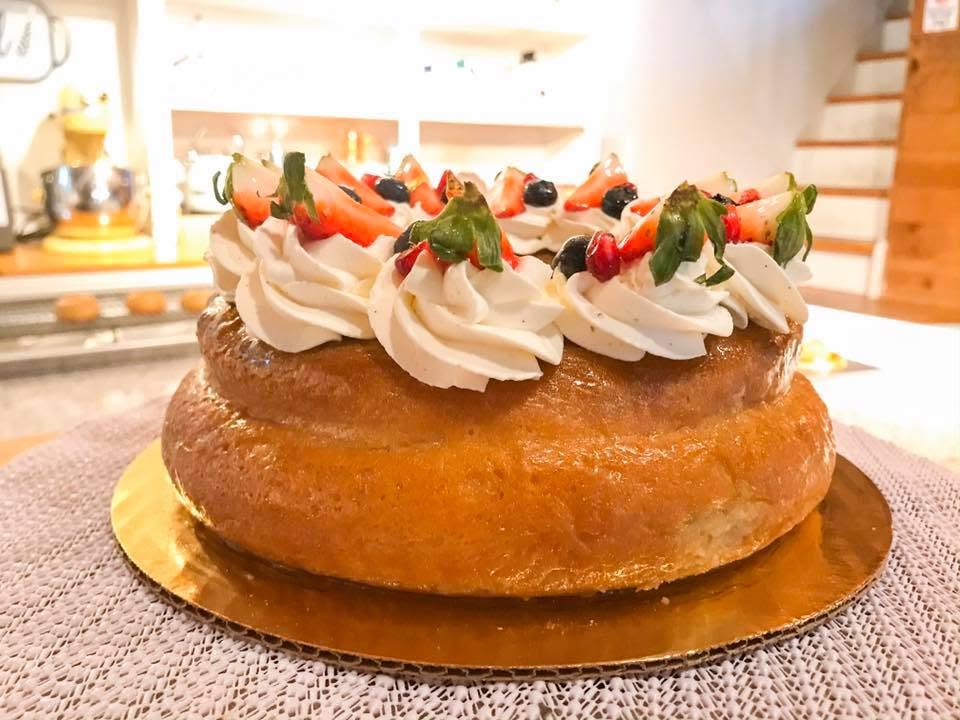
Baba au Rhum — A Little Cake with a Royal Past
Some pastries are remembered for their delicate appearance. Others leave a lasting impression with a single spoonful.
Baba au Rhum belongs to the second category.
Its story travels between Poland, the French region of Lorraine, and the elegant pastry shops of Paris.
According to a celebrated legend, Stanislas Leszczyński, the former King of Poland, found his cake too dry and asked that it be moistened with wine. His pastry chef, Nicolas Stohrer, is associated with the transformation of this idea into the famous baba.
When Stohrer established his Parisian pâtisserie on Rue Montorgueil in 1730, the dessert became part of the city’s culinary heritage. Over time, rum became its defining ingredient, giving the baba the unmistakable character we know today.
Unlike an ordinary sponge cake, a baba begins with a yeast-raised dough. Once baked, its airy structure is capable of absorbing an astonishing amount of fragrant syrup without losing its shape.
The result is a delicate contradiction: light yet generously soaked, tender yet resilient, intensely aromatic without being heavy.
A properly made baba offers the warmth of rum, the sweetness of syrup, and the subtle richness of a butter-enriched dough. Each spoonful is soft, fragrant, and wonderfully moist.
It is particularly delightful when accompanied by a cloud of Chantilly made with real Tahitian vanilla beans and a few fresh berries.
A small dessert with a remarkable journey, Baba au Rhum remains one of the great pleasures of classical French pâtisserie.

